The term FDE gets thrown around a lot these days. Most people using it are developers who happen to work in Foundry. The actual role, what Palantir calls a Deployment Strategist, is a completely different job. The best ones I've worked with didn't come from CS programs. They came from mechanical engineering, manufacturing floors, the army, and finance. They were self-taught coders who learned because they wanted to, not because a syllabus told them to. Here's what actually makes someone good at this and why most hiring processes are looking for the wrong things.
The Title Got Watered Down
Somewhere along the way, "FDE" went from meaning a specific kind of person at Palantir to meaning "anyone who builds things in Foundry." That's not the same thing.
At Palantir, the role is actually called Deployment Strategist. That name exists for a reason. You're not just writing code. You're running business processes internally and externally, managing relationships with the people you're working with, understanding their problems sometimes better than they do, and building the solution at the same time. It's three jobs wearing one badge.
Most people calling themselves FDEs right now are good developers. Some are very smart coders. But they tend to work within the scope they're given and lean on process more than adaptation. That's a developer, not an FDE.
The distinction matters because when someone hires an "FDE" and gets a developer, the project scope stays exactly where it started. Nobody's questioning the ROI. Nobody's adapting the approach when the original plan doesn't fit. Nobody's saying "actually, we don't need to rebuild this entire system."
I had a project where the team wanted a full overhaul of a system that was previously built in Foundry because it was inaccurate and causing problems. They came in expecting a major rebuild. I spent under 10 minutes looking at it and found a fix that didn't require changing much beyond some basic adjustments. A developer would have started the rebuild. An FDE asks why first.
What Actually Predicts Success
The best FDEs I've worked with, both at Palantir and outside of it, were people who did not go to university for software or computer science. Most had engineering degrees in classical fields like mechanical, industrial, or chemical. Some of the best didn't have degrees at all. Ex-military, trades, people who'd spent years solving problems with their hands before they ever touched a keyboard. They were self-taught programmers, picking up coding from personal projects they built on their own time. Not because someone assigned it, but because they had a problem worth solving.
This was before AI could write code for you. These were people who sat down and learned SQL or JavaScript on their own time because they had a problem they wanted to solve.
I was one of them. I worked in civil engineering and honestly, I hated it. The industry at the time felt like it was allergic to technology and I wanted to be building things, not fighting people to adopt a spreadsheet. But I had a job on a very large provincial infrastructure project where I was doing repetitive reporting work, tracking contractor non-compliance, and calculating penalties for missed milestones. So I taught myself VBA and Python and built tools that automated the whole thing. One click: calculate the penalties, generate the report, create the folder on the server, upload the files. Not because someone asked me to. Because the manual process was driving me insane.
That drive to learn, to look at a broken process and think "I can fix this," is the single best predictor of FDE success I've seen. Not what school you went to. Not your LeetCode score. Not how many years you've spent in Foundry.
The Backgrounds That Surprise People
I worked on a project where the project's internal champion was a dispatcher. No technical background in the traditional sense. But they learned Palantir, and their willingness to learn combined with their understanding of the actual business operations made them effective fast. They ended up working for a Palantir consulting firm later.
Another one came from a business commerce background. They were at a company that had Palantir and were learning because they had to, but they decided they wanted to learn it despite the requirement. I helped coach him, as he did need help, but he knew he needed help and wanted the help. Same outcome. Drive plus context plus willingness to ask questions turned them into a solid FDE. Also ended up in Palantir consulting.
Neither of these people would have passed a traditional technical interview. Neither had CS degrees. Both were better at the actual job than a lot of people who did.
What they had in common: real-world experience dealing with people. Whether it was dispatching, working in manufacturing, finance, the army, whatever. Anywhere that forced you to solve problems with incomplete information while also communicating with humans who aren't technical. That combination is rare and hard to screen for in an interview.
Honesty Is the Whole Game
If I had to pick one trait above everything else, it's honesty.
Consultants say yes to everything. "Yes we can do that. Yes that timeline works. Yes that's possible." And then when they can't deliver, they either say kick rocks or charge you more to bring in someone who actually can. I've seen it happen on multiple projects and it always creates the same mess.
The FDEs who earn trust are the ones who say "that's not possible right now" or "I don't know how to do that yet but I'll figure it out" or even "that's a bad idea, here's why." People respect that. Not the yes-person who promises the world and underdelivers. People can smell that from a mile away, and it destroys the relationship faster than any technical failure.
Being honest about your limitations isn't weakness. It's the thing that makes people trust you enough to give you the hard problems.
It's Not About Being Extroverted. It's About Being Willing.
Let me be clear about this because I don't want it to be misread. Being introverted doesn't mean you can't be successful in this role. Plenty of great FDEs recharge alone and prefer smaller groups. That's not what I'm talking about. What will hold you back is a genuine fear of talking to people you don't know and an unwillingness to build relationships. If connecting with strangers feels impossible, not just uncomfortable but something you actively avoid, the Deployment Strategist side of this role is going to be a constant uphill battle.
The real FDE job requires building relationships quickly. You're walking into a new environment, meeting a room full of strangers, and within days you need them to trust you enough to tell you where their processes are broken. That takes a willingness to put yourself out there that not everyone has.
Introverts can absolutely be great Foundry developers. But the Deployment Strategist role, the one running the business relationship and the project and the build simultaneously, needs someone who can make human connections, crack a joke in a meeting, and not take everything so seriously that people feel like they're working with a robot.
I put myself in positions early on where I had to go meet people and convince them of something. Going door to door, talking to strangers, learning to read a room, and adjusting your approach based on who you're talking to. That experience translated directly into project work more than any technical skill I picked up.
What Coaching Football Taught Me About Being an FDE
This is going to sound like one of those LinkedIn cliches where someone connects their hobby to their job, but it's surprisingly true. I coach youth football. Grade 5 and 6 kids. Started as an assistant, now I'm the head coach. And the parallels are honestly kind of ridiculous.
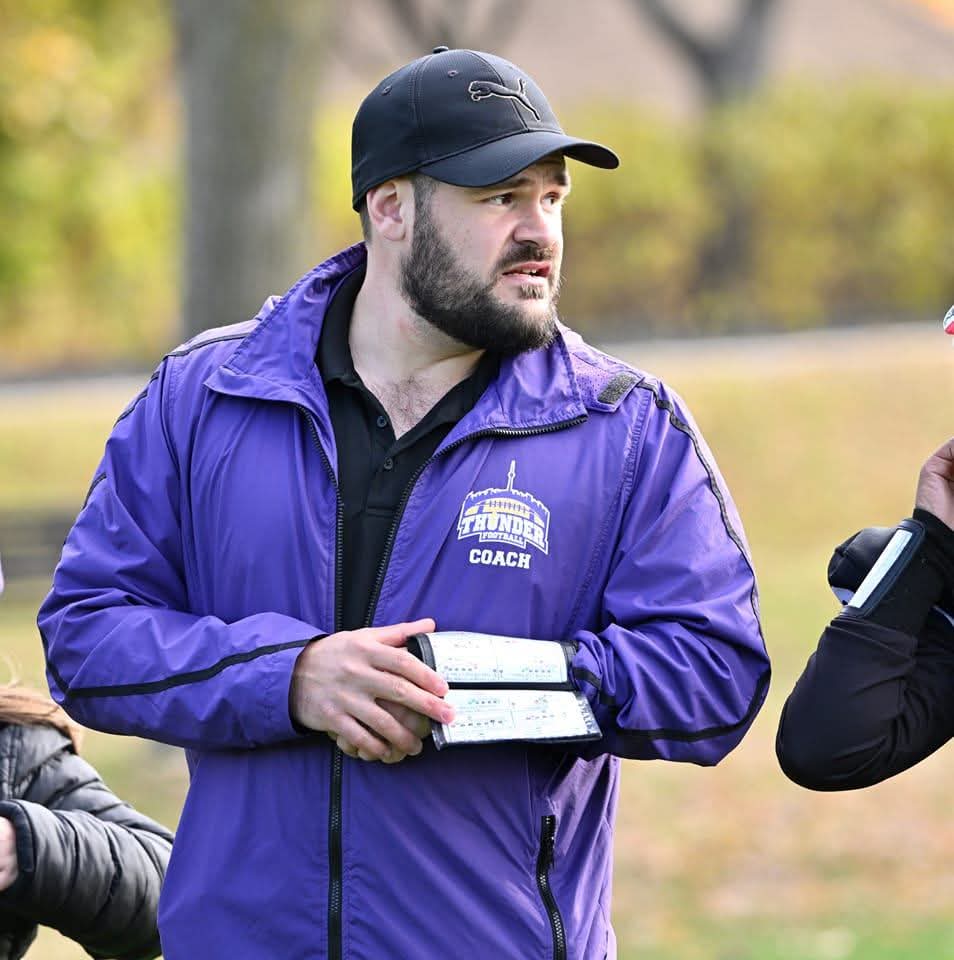
In coaching, you build a playbook. You spend weeks on it. Then game day comes and the kids can't run half of what you drew up. So you adapt. You simplify. You figure out what they can actually execute under pressure and you build around that. The playbook on paper is a starting point, not a script.
Foundry deployments work the same way. You walk in with a plan. The data is messier than anyone admitted. The team can't adopt three new tools at once. The timeline was optimistic. So you adapt. You question the plan, adjust on the fly, and figure it out. That's the job.
Then there's dealing with the parents. If you can keep composure when a parent is in your face about playing time while also managing a kid who doesn't want to be there while also trying to win the game, you can handle a difficult stakeholder who doesn't understand why the pipeline broke.
And if you can teach a 10-year-old how to read a defensive formation, you can teach a business analyst how to use a Workshop dashboard. The patience is the same. The payoff is different. In coaching it's winning games and championships. In FDE work it's shipping something that actually changes how a team operates. Both require reading people, adapting plans, staying calm when it falls apart, and being honest when something isn't working.
What to Look For When Hiring
If you're building a Foundry team or hiring an FDE, stop looking at resumes the way you've been looking at them.
LeetCode scores don't predict FDE success. Palantir Foundry experience alone doesn't predict it either. I've seen people with years on the platform who still can't run a project independently.
Look for:
- Humility. Can they admit what they don't know? Do they ask questions or pretend to have answers?
- Honesty. Will they tell you something's a bad idea, or will they nod and build whatever you ask for?
- Drive. Have they built something on their own because they wanted to? Not a school project. Something they chose to do.
- Communication. Can they explain a technical concept to someone non-technical without being condescending?
- Real-world experience. Have they worked in environments where they had to deal with people, ambiguity, and incomplete information?
A good FDE creates more good FDEs. Bad teaching won't help anyone regardless of how talented the person is. If you're hiring your first one, make sure they can teach, not just build. The whole team depends on it.
If You're Reading This Thinking "Could I Do This?"
Palantir's acceptance rate is lower than Ivy League schools. Even among the people who get in, not all of them are cut out for the Deployment Strategist role. So the honest answer is: probably not, statistically.
But statistics don't account for drive. I didn't get into an Ivy League school. I beat the odds because I hated my job enough to teach myself programming, I was comfortable talking to strangers, and I didn't give up during the first two weeks at Palantir when they hit me with the firehose. Everything at once, max volume, figure it out. I was expected to build and demo a full end-to-end workflow for a high-stakes RFI when I barely knew how to navigate the platform.
I survived that because other good FDEs were willing to walk me through things, explain them in different terms, and be patient. But I also read through Palantir's docs until 2am and didn't ask for help until I genuinely needed it. Perseverance and persistence got me through. If you don't have that at a minimum, you're out.
Question it. Adapt. Overcome.
If you're trying to figure out who to hire or how to evaluate Foundry talent, this is the kind of conversation we have all the time. Hit us up and we'll help you figure out what "good" looks like for your specific situation.
